
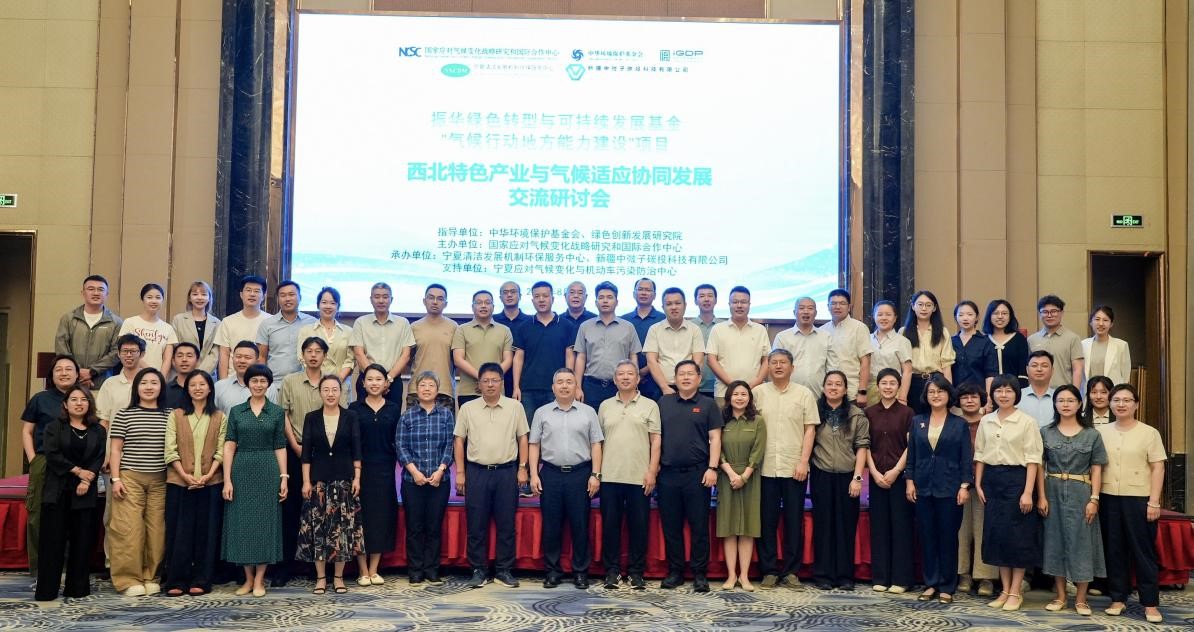
From August 4 to 5, 2026, the Exchange and Discussion Event on the Coordinated Development of Northwest China's Distinctive Industries and Climate Adaptation was successfully held in Yinchuan, Ningxia. The event was held under the Zhenhua Green Transition and Sustainable Development Fund's “Local Capacity Building for Climate Action” project. It was guided by the China Environmental Protection Foundation (CEPF) and the Institute for Global Decarbonization Progress (iGDP), hosted by the National Center for Climate Change Strategy and International Cooperation (NCSC), and organized by the Ningxia Clean Development Mechanism Environmental Protection Service Center and Xinjiang Neutrino Carbon Investment Technology Co., Ltd.
The event focused on advancing the low-carbon upgrading of Northwest China's distinctive industries in tandem with climate adaptation. It brought together government departments, research institutes, businesses, and civil society organizations. Through a combination of field visits and thematic discussions, participants shared local experience in green transition, explored solutions to barriers to coordinated development, and strengthened climate resilience, with a view to identifying replicable and scalable models for regionally differentiated climate governance across China. Participants included Xu Guang, Chairman of CEPF; Wang Zhengang, Deputy Secretary-General of CEPF; Xu Huaqing, former Director of NCSC; Jiao Wentao, a member of the Party Leadership Group of the Department of Ecology and Environment of Ningxia Hui Autonomous Region; Wang Yanhui, Deputy Executive Director for Operation and Organizational Development at iGDP; representatives of supporting organizations such as the Climate Change and Motor Vehicle Pollution Prevention and Control Center of Ningxia Hui Autonomous Region and the Ningxia Climate Center; officials responsible for ecology and environment from provinces and autonomous regions across Northwest China; representatives of new-energy enterprises; experts from carbon service providers; and scholars from universities and think tanks.
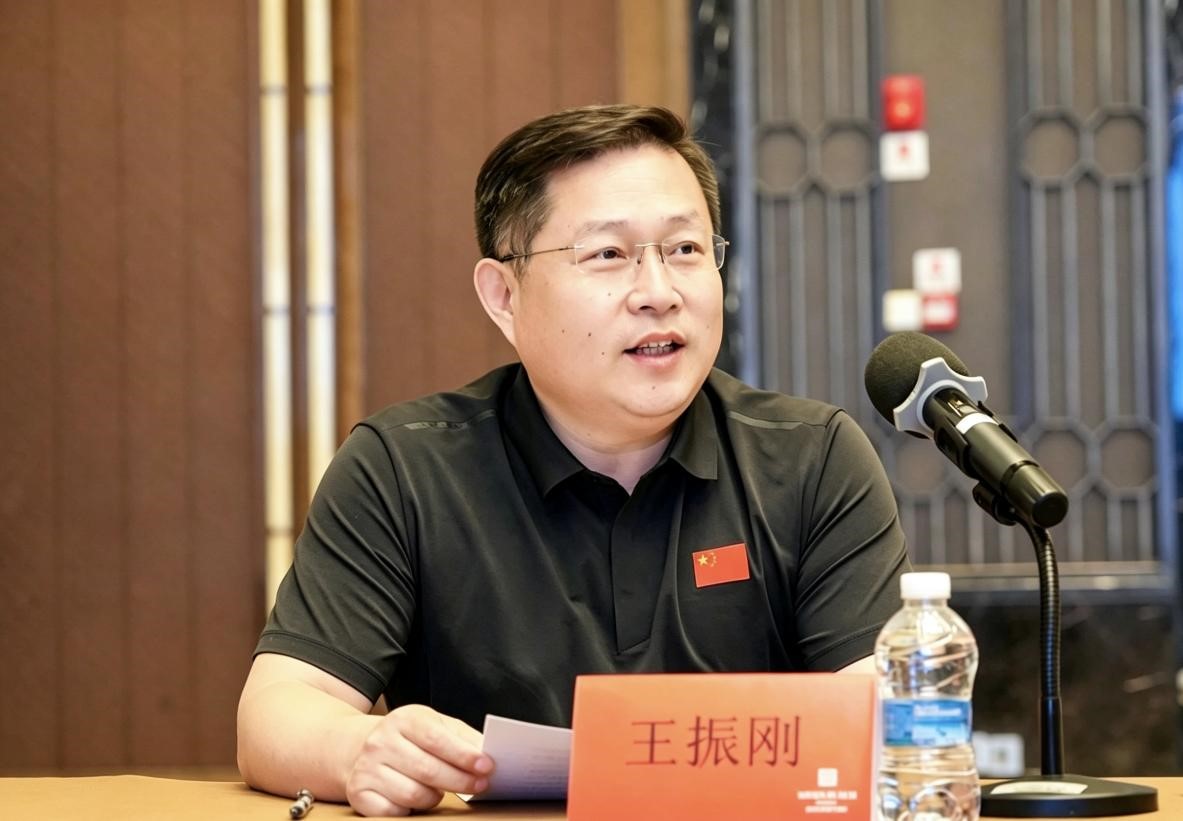
In his remarks, Wang Zhengang, Deputy Secretary-General of CEPF, said that in the field of forward-looking climate action, the Zhenhua Fund closely follows the national strategic direction set by China's goals of carbon peaking and carbon neutrality while remaining deeply rooted in local development needs. By bringing together stakeholders from across society, the Fund created the “Local Capacity Building for Climate Action” project. Project events have successively been held in Hangzhou, where digital innovation is driving green transition; Changchun, where the revitalization of Northeast China carries the mission of industrial decarbonization; Guiyang, a national ecological civilization pilot zone testing new approaches; Chongqing, a city of mountains and rivers strengthening the ecological barrier in the upper reaches of the Yangtze River; Guangzhou, at the forefront of reform and opening-up and exploring low-carbon pathways for megacities; and Nanjing, where the heritage of an ancient capital is being renewed through green transformation. Along the way, the project has received broad support and recognition. “We are helping each city identify a green-transition pathway suited to its own circumstances, while seeking a vivid, practical answer to the question of local climate governance in China,” Wang said.
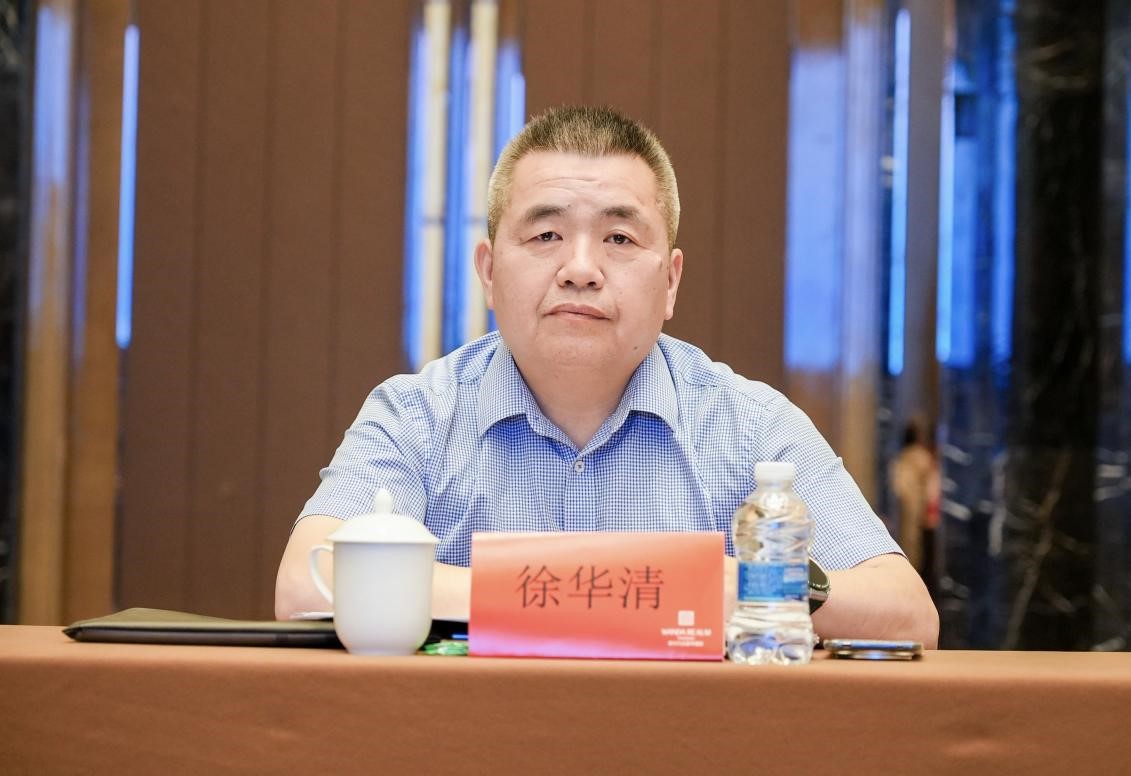
Xu Huaqing, former Director of NCSC, noted in his remarks that China's work toward its goals of carbon peaking and carbon neutrality has entered a critical stage in which carbon reduction is the central task and mitigation and adaptation are accorded equal importance. Northwest China is a core base for the country's wind and solar energy resources, yet it also has a fragile ecological foundation and a relatively heavy industrial structure. The region therefore combines substantial potential for clean-energy development with significant pressure on climate governance. Focusing discussions here on the coordinated development of distinctive industries, low-carbon upgrading, and climate adaptation is both an effort to identify transition strategies suited to the Northwest's resource endowments and an opportunity to distill model experience for regionally differentiated climate governance nationwide, making the event particularly significant. Xu added that NCSC will continue to serve as a platform, deepen cooperation with partners throughout Northwest China, fully support clean-energy development and the building of a climate-resilient society, and continue identifying distinctive transition models in western China, thereby contributing the Northwest's strengths to the nationwide achievement of the goals of carbon peaking and carbon neutrality.
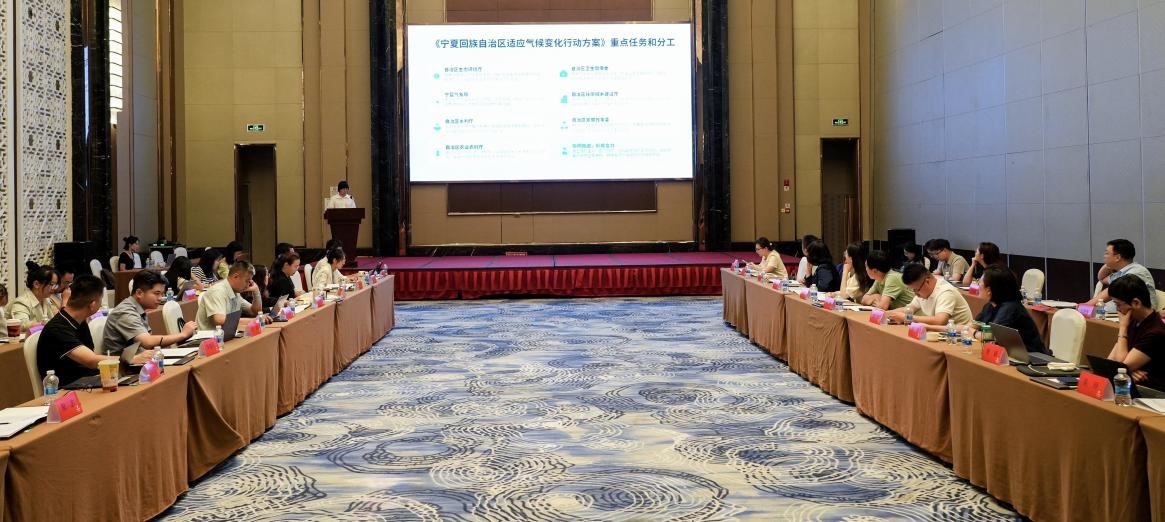
During the practice-sharing session for local climate action partners, representatives from provinces and autonomous regions across Northwest China presented their local approaches to green and low-carbon transition and climate adaptation. The Ningxia Climate Center outlined the region's basic climate-change characteristics and projected trends. The Climate Change and Motor Vehicle Pollution Prevention and Control Center of Ningxia Hui Autonomous Region reviewed progress in and implementation of Ningxia's climate-adaptation policies. The Ningxia Center for International Cooperation on Desertification Control shared Ningxia's experience in implementing the United Nations Convention to Combat Desertification in support of climate action. The Yinchuan Municipal Bureau of Ecology and Environment presented highlights and lessons from the city's development as a climate-adaptive city. The Xi'an Chuncan Social Work Service Center shared Shaanxi Iron and Steel Group Longgang Company's multi-stakeholder green-transition practice in synergizing pollution and carbon reduction. The Shanxi Science City Energy and Environment Innovation Research Institute presented innovative practices and challenges related to the local consumption of new energy in Shanxi Province.
During the expert perspectives session, experts, scholars, and business representatives from the Ningxia Academy of Social Sciences; the Inner Mongolia Autonomous Region Ecological Environment Low-Carbon Development Center; the Xinjiang Academy of Ecological and Environmental Sciences; Lanzhou Jinshi Resources and Environmental Technology Co., Ltd.; Ningxia University; Xinjiang Neutrino Carbon Investment Technology Co., Ltd.; the Ningxia Clean Development Mechanism Environmental Protection Service Center; and Jiangsu Skytech Industrial Internet Co., Ltd. shared in-depth insights on a range of topics. These included the diversified and integrated development of Ningxia's new-energy industry; practices in Inner Mongolia's green and low-carbon energy transition and its pathway outlook for the 15th Five-Year Plan period; models and pathways for coordinated progress toward Xinjiang's goals of carbon peaking and carbon neutrality from the perspective of climate adaptation in arid regions; Jiuquan's experience as a pilot city for collaborative innovation in pollution and carbon reduction; the pathway of the wine industry at the eastern foothills of the Helan Mountains toward carbon peaking and carbon neutrality; technical solutions and practices for biomass co-firing retrofits at coal-fired power units; pilot development of zero-carbon villages and towns in Ningxia; and a new paradigm for corporate carbon management in the age of AI.
The roundtable dialogue was moderated by a Deputy Director of the Climate Change and Motor Vehicle Pollution Prevention and Control Center of Ningxia Hui Autonomous Region. Representatives of the Yinchuan Municipal Bureau of Ecology and Environment, the Gansu Carbon Emission Rights Operations Center, COFCO Great Wall Wine (Ningxia) Co., Ltd., the Shanxi Science City Energy and Environment Innovation Research Institute, and the Ningxia Clean Development Mechanism Environmental Protection Service Center engaged in an in-depth discussion of the central issues involved in advancing Northwest China's distinctive industries in tandem with climate adaptation.

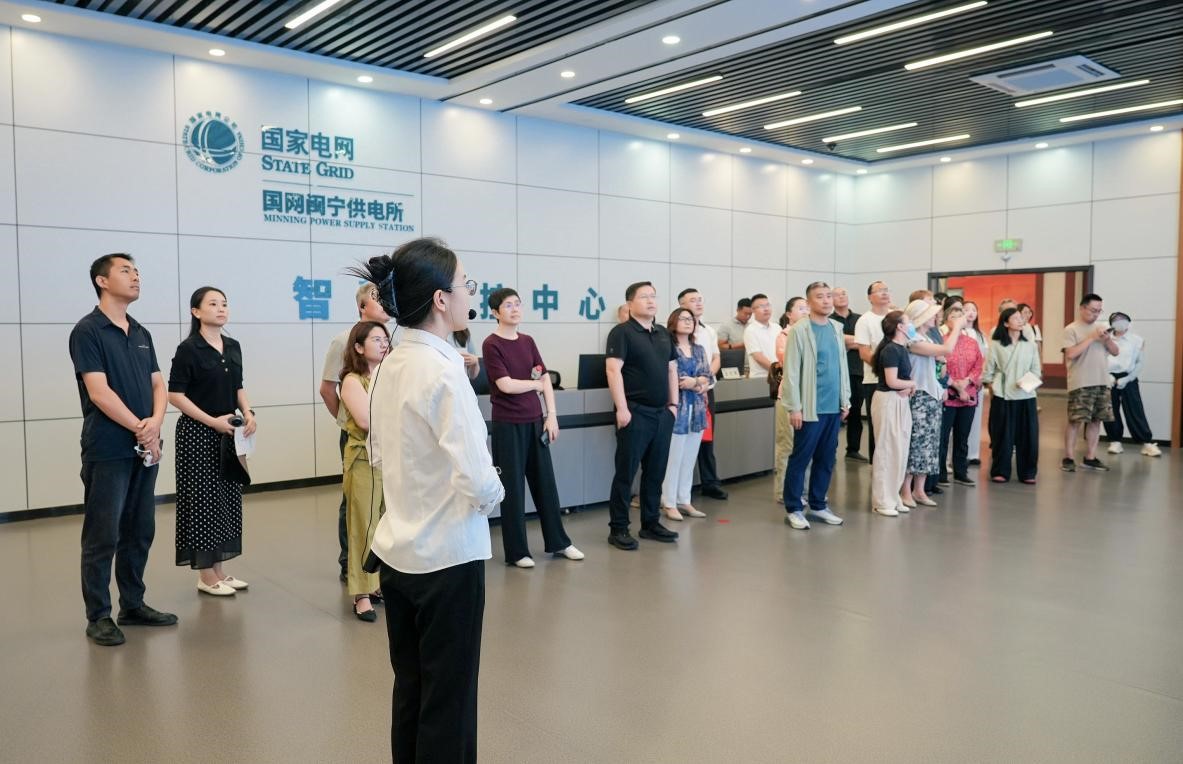
Participants also conducted field visits on August 4, traveling to Minning Green Power Town and a vineyard carbon-sink monitoring site in Minning Town at the eastern foothills of the Helan Mountains. At Minning Green Power Town, they observed the township's integrated source-grid-load-storage dispatch platform and learned about the development pathway and local new-energy consumption practices of Northwest China's first town supplied entirely by green electricity around the clock. They also visited Changsheng Photovoltaic Ecological Technology Park to examine a representative model integrating photovoltaic power with agriculture. At the vineyard carbon-sink monitoring site, participants studied China's first end-to-end case covering the development of a carbon-inclusion program for wine-grape vineyards, carbon-sink trading, and the conversion of ecological value. On site, they learned about real-time vineyard carbon-sink monitoring equipment and the processes used to measure and account for carbon sinks. During the visits, participants and company technical staff held in-depth exchanges on the integration of new energy, the development of ecological carbon sinks, and cross-regional cooperation on carbon inclusion.
The event systematically reviewed Northwest China's advanced experience and practical achievements in advancing the low-carbon transition of distinctive industries in tandem with climate adaptation, producing a set of focused and actionable points of consensus and recommendations. NCSC is also broadly soliciting outstanding practice cases in low-carbon transition and climate adaptation from partner organizations. The event generated initial outputs for a recommendations report on clean-energy consumption and coordinated, cross-regional development of carbon inclusion in Northwest China, as well as for the collection of representative cases. These outputs will subsequently be reviewed and distilled into replicable and scalable models, providing examples and references for local capacity building for climate action nationwide.
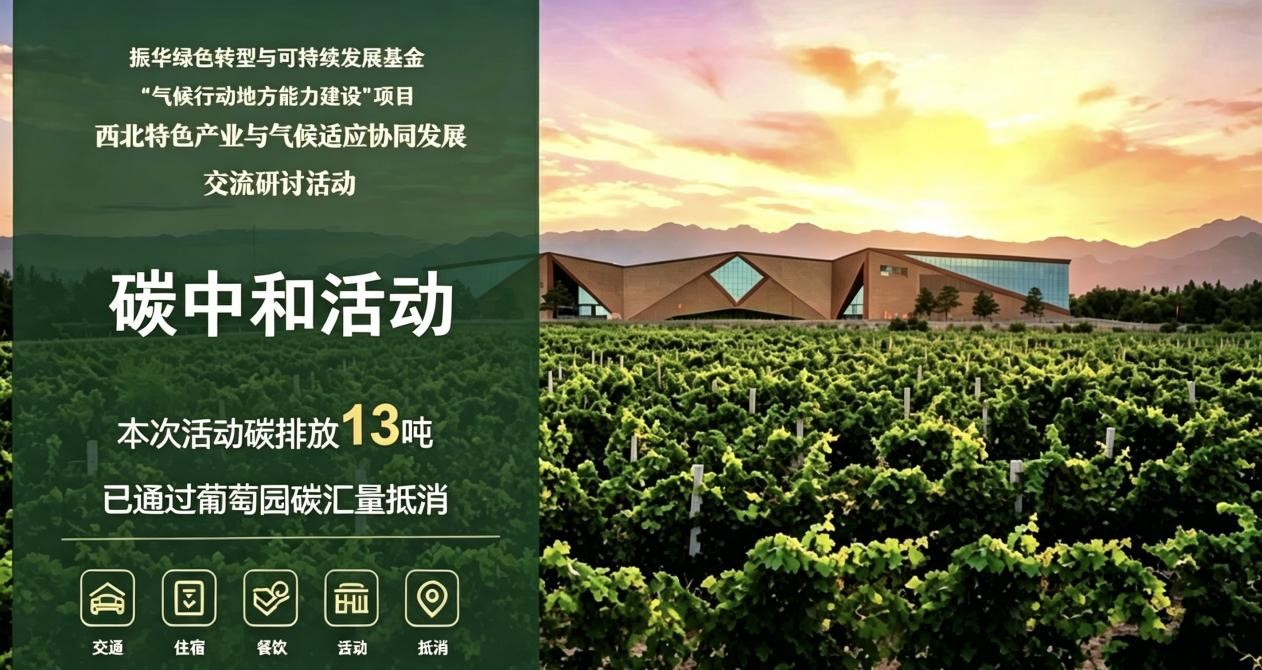
Notably, calculations showed that the event generated a total of 13 metric tons of carbon dioxide, including emissions from participants' round-trip travel, accommodation, meals, and event activities. The organizers purchased an equivalent amount of carbon emission reductions from the wine-grape vineyard base at the eastern foothills of the Helan Mountains, offsetting the event's emissions and successfully making it a carbon-neutral event. This measure not only put green principles into practice, but also provided a vivid example of converting the value of ecological carbon sinks in Northwest China and demonstrated the impact of coordinated emissions reduction among local climate action partners.
Going forward, the Zhenhua Green Transition and Sustainable Development Fund's “Local Capacity Building for Climate Action” project under CEPF will further deepen regional exchange and cooperation, build consensus, and coordinate action. It will work to deliver concrete progress in Northwest China's green and low-carbon transition and climate-adaptation capacity, making a greater contribution to China's goals of carbon peaking and carbon neutrality and to building a Beautiful China.