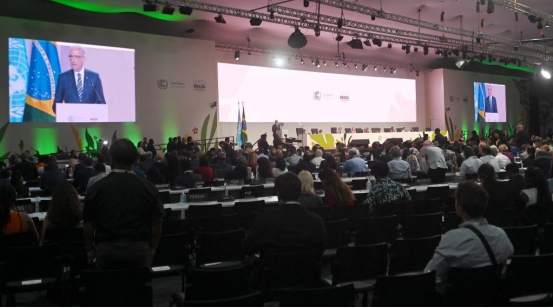
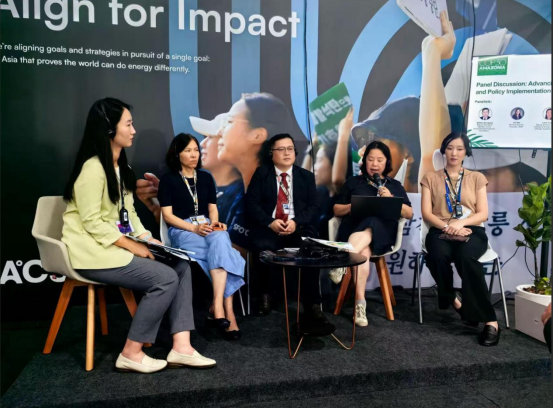
While global attention is focused on intergovernmental negotiations at the 30th Conference of the Parties (COP30) to the United Nations Framework Convention on Climate Change, green forces from Chinese civil society are equally active across Belém.
Deep Engagement in the Global Agenda, Sharing Chinese Practices
COP30, a crucial milestone marking the tenth anniversary of the Paris Agreement, brought together tens of thousands of representatives from over 190 countries to review and advance global climate action. Against this backdrop, China Environmental Protection Foundation (CEPF) was active on various stages of the conference, sending a strong signal of Chinese society's active participation in global climate governance.
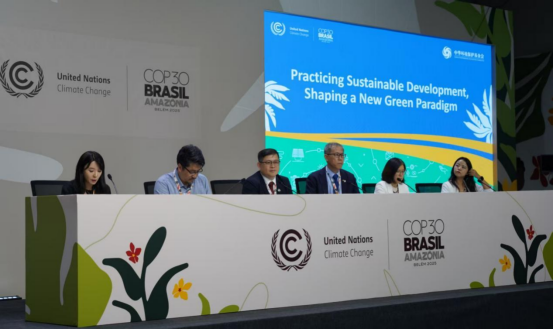
On November 15, at the UN press conference area of COP30, a press conference led by Chinese civil society organizations attracted international attention. This was not only a showcase for CEPF but also a concentrated presentation of the climate action achievements of the general public, communities, entrepreneurs, and public welfare enthusiasts from China. Deputy Secretary-General Wang Zhengang did not discuss grand emission data but instead showcased the vivid practices of the “Zhenhua Green Transition and Sustainable Development Fund”(“Zhenhua Fund”) in supporting green transition projects. He shared the accumulated green energy from hundreds of millions of users in "Ant Forest," told how ordinary old items are recycled in the "Old Shoes, New Life" project, and introduced how "Green Mountain Public Welfare" supports specific ecological guardians. These stories outline a picture of China's civil climate action built by hundreds of millions of regular people. At the conference, CEPF, jointly with representatives from various sectors, officially released the Climate Philanthropy and Business Sector Action Initiative, aiming to unite broader social forces and build a cooperation framework for the business sector and philanthropic institutions to jointly address climate challenges. This marks a new stage of scaled and institutionalized collaboration for China's climate philanthropy.
Contributing Professional Insights, Leading Key Topic Discussions
In numerous side events during COP30, the statements from CEPF always carried a distinct “civil society perspective”. When discussing “just transition”, the proposed idea was: How can a coffee consumer, through philanthropic mechanisms, directly support coffee farmers in Yunnan or Latin America to engage in ecological farming and protect rainforests? This is civil society wisdom initiated from the consumption end, involving collaboration across the industry chain.
At the side event of the Green Climate Fund (GCF), the “blended finance” practice we shared focuses on how to use limited philanthropic donations as a “catalyst” or “credit endorsement” to leverage and guide more commercial capital and community resources into areas with climate benefits but seemingly “unprofitable”, such as the sustainable development of protected areas and the promotion of low-carbon agricultural technologies. This flexible and innovative approach to resource integration is precisely the unique advantage of civil society organizations.
In discussions on “local climate action”, CEPF emphasized “empowerment” rather than “guidance”. By building expert networks and compiling case study “action reference books”, the goal is to provide knowledge tools to local communities and indigenous environmental organizations, stimulating their endogenous motivation to find the most suitable green transition path for their locality.
Hosting Thematic Side Event, Focusing on Green Trade and Just Transition
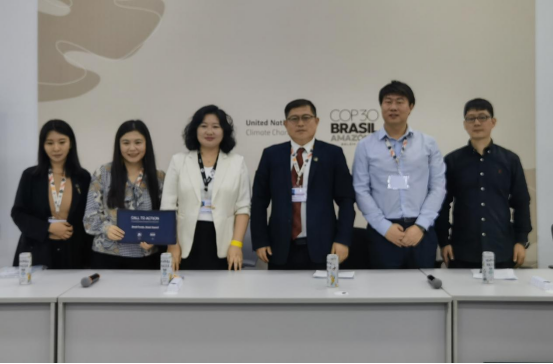
On November 18, CEPF, together with All-China Environmental Federation, successfully hosted the thematic side event “Green Trade and Just Transition” in the Blue Zone of COP30. This side event was a feast of civil society exchange. Mr. Gu Shengzu, Vice Chairman of the 13th National Committee of the Chinese People's Political Consultative Conference, delivered a video speech. Deputy Secretary-General Wang Zhengang emphasized in his speech that promoting green trade and just transition is a new development approach that unites environmental excellence, trade prosperity, and social equity. He also introduced the efforts of Zhenhua Fund in promoting international dialogue and talent cultivation. Experts from the World Wide Fund for Nature (WWF) discussed global forests and supply chains; an energy enterprise from Zhejiang shared practices in supply chain carbon accounting; an environmental organization from Beijing explored how to guide public consumption transformation; local conservation organizations from the Amazon introduced community experiences; and Chinese youth representatives voiced the perspectives of the next generation. CEPF acted as a “connector” linking diverse domestic and international civil society entities, enabling actors from different backgrounds to engage in dialogue on the same platform and seek cooperation opportunities.
The Value of Civil Society Action for Our Times
Through the series of events at COP30, CEPF not only presented to the international community a multi-dimensional picture of China's active explorations in climate philanthropy, corporate action, local practice, and green trade but also demonstrated the commitment of Chinese social organizations to actively integrate into global governance and contribute solutions.
China’s “Dual Carbon” goals are not merely an economic and technological process but also a broad and profound social mobilization and civilizational evolution. CEPF’s practices indicate that when the creativity and organizational capacity of civil society are fully activated and effectively connected, they unleash a momentum for systemic change that neither policies nor markets alone can generate. This force for green transition, emerging from the depths of society and rooted in daily life, is precisely the hope for the genuine implementation and enduring resilience of global climate governance. In Belém, the message conveyed by Chinese civil society to the world was clear and firm: the future climate blueprint will undoubtedly be co-authored by the state, business, and society, and the strokes of societal forces are becoming increasingly bold and crucial.